
| Date of decision: | 10 December 2025 |
| Body: | High Court |
| Adjudicator: | Gageler CJ, Gordon, Edelman, Jagot And Beech-Jones JJ |
Highlight
The High Court, in a key decision for all brand owners, has clarified how factors relevant to misleading and deceptive conduct allegations under the Australian Consumer Law should be considered and applied, particularly in contrast to trade mark infringement allegations.
Background
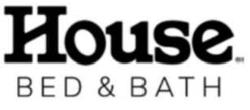
Global Retails Brands Australia Pty Ltd (GRBA) began to use the trade mark (HOUSE B&B mark).
Global Retails Brands Australia Pty Ltd (GRBA) began to use the trade mark shown in the image on the left (HOUSE B&B mark) in Australia in May 2021 in connection with soft homewares stores. Bed Bath ‘N’ Table Pty Ltd (BBNT), owner of a range of trade marks that included the “BED BATH ‘N’ TABLE” mark, which are also used and registered in connection with soft homeware stores in Australia, took issue with GRBA’s adoption of the HOUSE B&B mark and alleged that use of the HOUSE B&B mark constituted trade mark infringement and misleading and deceptive conduct in breach of section 18 of the Australian Consumer Law (ACL). BBNT’s misleading and deceptive conduct case relied on its extensive use of, and reputation in, the BED BATH ‘N’ TABLE mark in connection with soft homewares in Australia since 1976.
The case made its way through the Federal Court[1], where the primary judge, Justice Rofe, found that use of the HOUSE B&B mark did not infringe the BED BATH ‘N’ TABLE mark but GRBA’s activities in using the HOUSE B&B mark did constitute misleading and deceptive conduct in breach of the ACL. Her Honour reasoned that, while the marks were not substantially identical or deceptively similar (ie no trade mark infringement), the ordinary and reasonable consumer being aware of BBNT’s reputation in the BED BATH ‘N’ TABLE mark would see the HOUSE B&B mark and be likely to be misled into thinking that there was some connection between the HOUSE B&B stores and BBNT.
GRBA appealed Justice Rofe’s decision regarding misleading and deceptive conduct to the Full Court of the Federal Court[2], where Justices Nicholas, Katzmann and Downes reversed Justice Rofe’s decision on that point. Their Honours were of the view that Justice Rofe had erred in concluding that consumers were likely to be misled or deceived by the use of the HOUSE B&B mark when her Honour did not consider the HOUSE B&B mark to be deceptively similar to the BED BATH ‘N’ TABLE mark. Their Honours were not persuaded that BBNT’s substantial reputation in the BED BATH ‘N’ TABLE mark could account for the different findings given that deceptive similarity (for infringement) requires a likelihood of consumer confusion between two or more marks.
BBNT appealed the Full Court’s decision, asking the High Court to confirm which method of assessing misleading and deceptive conduct was correct.
Outcome
The High Court agreed with Justice Rofe and her assessment of misleading and deceptive conduct, making the following important points:
- The Full Court had conflated the relevant inquiries for trade mark infringement and misleading and deceptive conduct by unduly focusing its analysis for misleading and deceptive conduct on whether the marks were deceptively similar.
- The answer to a trade mark infringement case is not necessarily the answer to a misleading and deceptive conduct case. “The scope and function of the Trade Marks Act is different from the scope and function of the Australian Consumer Law, and the interests the former Act protects are different and have, in any event, changed over time.”[3]
- For misleading and deceptive conduct, the use of the marks must be considered in context; to decontextualise the marks from the parties’ conduct runs the risk of conflating the trade mark concept of “distinctiveness” with “the broader concept of conduct in its immediate and broader context applicable to s18(1) of the Australian Consumer Law”.[4]
- Justice Rofe’s finding that GRBA’s use of the HOUSE B&B mark constituted misleading and deceptive conduct did not, and does not, give BBNT a monopoly in the words “bed” and “bath”. Rather, Justice Rofe’s assessment was simply that GRBA’s conduct satisfied the statutory requirements for misleading and deceptive conduct; a different manner of use of the words “bed” and “bath” may not result in the same finding.
- Australian Woollen Mills v F S Walton & Co Ltd (1937) 58 CLR 641 at 658 is good authority that “if a mark or get-up for goods is adopted for the purpose of appropriating part of the trade or reputation of a rival, it should be presumed to be fitted for the purpose and therefore likely to deceive or confuse”. This principle does not require dishonest intention. The High Court stated that a person can be “scrupulously honest and yet by conduct contravene [the ACL]”[5]. In this case, there was sufficient evidence to indicate that GRBA was aware of BBNT’s reputation in the BED BATH ‘N’ TABLE mark and had decided to take part of that mark to incorporate into its own HOUSE B&B mark in order to achieve a certain end (ie to take part of BBNT’s trade).
The High Court allowed BBNT’s appeal, setting aside the Full Court’s decision and reinstating the primary judge’s decision.
Implications
Trade mark infringement and misleading and deceptive conduct actions are often pleaded together in brand litigation. They are, however, two very different beasts, even if on the surface they appear to share some similar elements. Because of the different considerations involved, it is important to plead both actions (as well as the tort of passing off) where they are available on the facts as different outcomes can result.
Traders should also be careful not to sail too close to the wind when adopting a new trade mark. The High Court has clarified in this decision that adopting elements of an earlier well-known brand for the purpose of also taking some of that brand’s market share can be sufficient to support a finding of misleading and deceptive conduct.
[1] Bed Bath N’ Table Pty Ltd v Global Retail Brands Australia Pty Ltd (2023) 182 IPR 393
[2] Global Retail Brands Australia Pty Ltd v Bed Bath N’ Table Pty Ltd (2024) 183 IPR 123
[3] Bed Bath ‘N’ Table Pty Ltd v Global Retail Brands Australia Pty Ltd [2025] HCA 50 at [40]
[4] Bed Bath ‘N’ Table Pty Ltd v Global Retail Brands Australia Pty Ltd [2025] HCA 50 at [41]
[5] Bed Bath ‘N’ Table Pty Ltd v Global Retail Brands Australia Pty Ltd [2025] HCA 50 at [54]
About Pearce IP
Pearce IP is a privately owned/independent, specialist, life-sciences focussed, intellectual property/law firm offering lawyers and attorneys in Australia and New Zealand.
Our lawyers and attorneys specialise in pharma, biopharma, biotech, ag-tech, food-tech, med-tech, although our work is broader than these industries.
Pearce IP and its leaders are ranked in every notable legal directory including: Chambers & Partners, Legal 500, IAM Patent 1000, IAM Strategy 300, MIP IP Stars, Doyles Guide, WTR 1000, Best Lawyers, WIPR Leaders, Best Law Firms, among others. In 2025, Pearce IP was honoured by Australasian Lawyer and New Zealand Lawyer as a Top Specialist Firm, 5 Star Employer of Choice, and the “Standout Winner” for Inclusion and Culture (<100 employees).
Pearce IP is the only leading IP firm in Australia and New Zealand with a female founder, and is certified by WEConnect International as women owned.

Helen Macpherson
Executive, Lawyer (Head of Litigation –Australia)
Helen is a highly regarded intellectual property specialist and industry leader with more than 25 years’ experience advising on patents, plant breeder’s rights, trade marks, copyright and confidential information. She is known for her expertise in complex, high-value patent matters and leverages her technical background in biochemistry and molecular biology to work across a wide range of technologies, including inorganic, organic, physical and process chemistry, biochemistry, biotechnology (including genetics, molecular biology and virology), and physics. Helen is an active member of the Intellectual Property Committee of the Law Council of Australia and the Intellectual Property Society of Australia and New Zealand.

Naomi Pearce
CEO, Executive Lawyer (AU, NZ), Patent & Trade Mark Attorney (Trans Tasman)
Naomi is the CEO and Founder of Pearce IP, and is one of ANZ’s leading IP practitioners. Naomi is a market leading, strategic, commercially astute, patent lawyer, patent attorney and trade mark attorney, with over 29 years’ experience, and a background in molecular biology/biochemistry.
Ranked in virtually every notable legal directory, highly regarded by peers and clients, Naomi is renowned for her successful and elegant IP/legal strategies focussing on complex/multijurisdictional litigation, global FTO, and strategic advice. Among other awards, Naomi is the 2026 Lexology Client Choice Winner for Patents, the 2024 Lawyers Weekly Women in Law “Executive of the Year”, the 2023 Lawyers Weekly “IP Partner of the Year”, the 2022 Lexology Client Choice Winner for Life Sciences, the 2022 Asia Pacific Women in Business Law “Patent Lawyer of the Year”, and the 2021 Lawyers Weekly Women in Law “Partner of the Year”. Ranked in Chambers Asia Pacific, Chambers Global, IAM Patent 1000, IAM Strategy 300, is a MIP “Patent Star”, and is recognised as a WIPR Leader for patents and trade marks.
Pearce IP is the premier life sciences focussed firm in ANZ. Commencing in 2017. Pearce IP is the 2025 Australasian Lawyer and NZ Lawyer 5-Star Employer of Choice & “Standout Winner” for Inclusion and Culture (<100 employees). In 2021, Pearce IP was the Lawyers Weekly Australian Law Awards IP Team of the Year.