

The consultation paper has been developed in conjunction with the New Zealand Ministry of Business, Innovation and Employment (MBIE) which oversees the operation of the New Zealand Intellectual Property Office (IPONZ).
The consultation paper can be found here: Public Consultation Template
The proposals are as follows:
| Proposal 1 | Expanding the definition of “exclusive licensees” for patents to allow “partial” exclusive licensees to bring infringement proceedings (joined with the patentee).
The consultation paper also suggests expanding this definition in respect of designs and plant breeders’ rights (PBRs). |
| Proposal 2 | To shorten the opposition process in respect to pharmaceutical patent extensions of term (PTE). Currently, the Section 75 substantive opposition procedure can be lengthy. The proposal is to amend the Patents Regulations 1991 to reclassify Section 75 as procedural oppositions whereby the Commissioner would have greater flexibility to manage the process more effectively. |
| Proposal 3 | Currently, for both patents and trade marks, Australia has a “time to acceptance” deadline system which gives Applicants a fixed period (12 months for patents and 15 months for trade marks) to secure acceptance regardless as to how many reports and responses are filed. The proposal is to shift to a US-style response-based deadline system. For instance, Applicants would need to respond in a shorter period (e.g., 2 months) and the number of responses would also be limited, at which time, a final rejection procedure would commence. |
| Proposal 4 | Allow the Commissioner to award costs in trade mark oppositions above those outlined in the schedule. Currently, in trade mark oppositions, costs are limited to the specific amounts specified in a schedule to the regulations. The consultation paper mentions that the reason for this proposed reform is to stamp out occasional “poor behaviour” during trade mark oppositions. |
| Proposal 5 | Amend the Trade Marks Act 1995 and Trade Marks Regulations 1995 so that existing references to the Madrid Protocol and Regulations apply to the versions as in force and updated from time to time. A further proposal is to also amend the Act and Regulations so that the source of the ‘class headings’ is the Nice Agreement as in force and updated from time to time. These proposals are suggested for future proofing and would remove the need for ongoing legislative amendments, ensure alignment with international systems, and provide clearer and more accurate legislative references. |
| Proposal 6 | Provide the Registrar with better powers to finalise trade mark oppositions. Particularly, the proposal is to amend the legislation to provide the Registrar the power to dismiss or finalise oppositions where both parties have abandoned the matter and are no longer participating. |
| Proposal 7 | Amend the trade mark legislation to allow the Registrar to correct ownership errors before and after registration in defined circumstances (eg., where entities are closely connected or act in concert). |
| Proposal 8 | Remove the requirement for certificates of verification for trade marks and designs. |
| Proposal 9 | For patents, PBRs and designs, allow virtual marking of products (rather than just physical product marking), for example, by QR code, barcode and URL. |
| Proposal 10 | Amend the Plant Breeder’s Rights Act 1994 (PBR Act) to introduce a 6 month, non-extendable grace period for payment of renewal fees (like for patents). |
| Proposal 11 | Amend the PBR Act to repeal the mandatory herbarium deposit requirement for native plant varieties. Deposits would instead become voluntary. |
| Proposal 12 | Provide the Commissioner with greater powers to investigate, discipline and govern deregistered IP attorneys. |
| Proposal 13 | Currently, the Patents Acts of both AU and NZ require registered patent attorneys to be in regular attendance at their office and in continuous charge of the patents work undertaken there. The proposal is to amend or repeal provisions (in both AU and NZ) to make it clear that an attorney may supervise and be “in attendance” either physically or remotely. |
Section B of the consultation paper sets out the following policy issues on which IP Australia has no set view, but has asked for comments nonetheless:
| Issue 1 | Removing the declaration requirement for initial short extensions of time (under Section 223) and limiting the time patents can be revived with an extension of time. |
| Issue 2 | Reforming patent timeframes by giving 3rd parties greater powers to intervene in the patent application process. The consultation paper also mentions a possible reform to the current flexibilities surrounding Australian divisional filing practice. |
| Issue 3 | Amend the designs legislation to streamline and reduce complexity in how applications for more than one design are handled after filing. |
| Issue 4 | Increase the flexibility for filing excluded designs. |
| Issue 5 | Clarifying exhaustion (Section 23) in the PBR Act. |
| Issue 6 | Clarifying how PBRs apply where harvested material is also propagating material. |
Submissions in reply to any of the above proposals or issues are due 2 April 2026.
If you would like assistance or have any questions regarding this consultation paper, please do not hesitate to contact us.
About Pearce IP
Pearce IP is a specialist, life-sciences focussed, intellectual property/law firm offering lawyers and attorneys in Australia and New Zealand.
In 2025, Pearce IP was honoured by Australasian Lawyer and New Zealand Lawyer as a Top Specialist Firm, 5 Star Employer of Choice, and the “Standout Winner” for Inclusion and Culture (<100 employees). Pearce IP and its leaders are ranked in every notable legal directory including: Chambers & Partners, Legal 500, IAM Patent 1000, IAM Strategy 300, MIP IP Stars, Doyles Guide, WTR 1000, Best Lawyers, WIPR Leaders, Best Law Firms, among others.
Pearce IP is the only leading IP firm in Australia and New Zealand with a female founder, and is certified by WEConnect International as women owned.

Mathew Lucas
Executive, Patent & Trade Mark Attorney (AU, NZ)
Mathew Lucas is an Executive Patent & Trade Mark Attorney with over 25 years’ experience in patent prosecution, oppositions, freedom-to-operate advice, litigation support, and strategic IP advice, focusing on the life sciences sector including pharma/biopharma, chemistry, materials science, diagnostics and biotechnology. He has drafted more than 500 patent specifications across a wide range of technologies.
Mat holds a PhD in Chemistry from the University of Melbourne and completed post-doctoral research at the University of Illinois (Chicago) and the University of Adelaide in areas including radical chemistry, diagnostic technologies and therapeutic compounds.
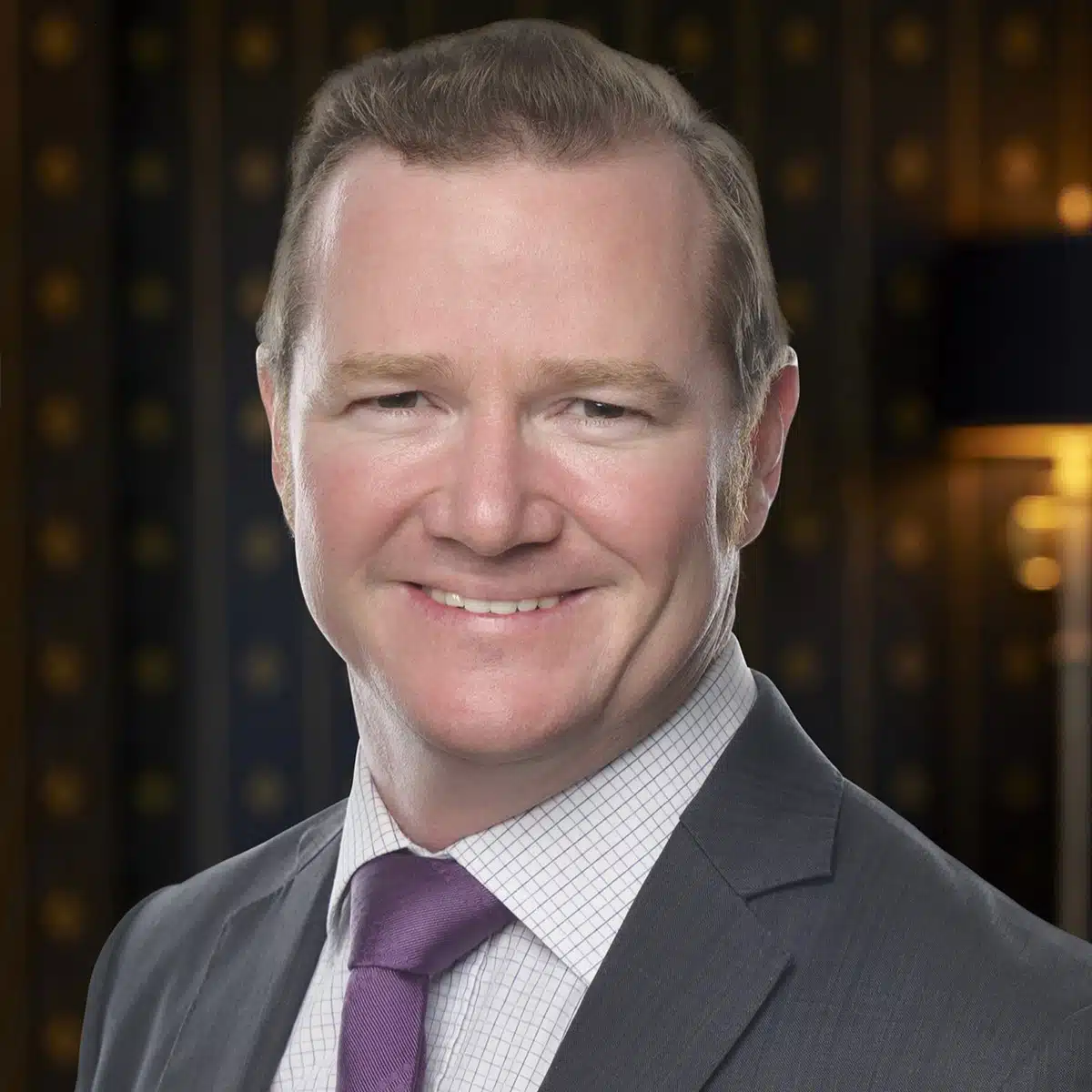
Paul Johns
Executive, Lawyer (Head of Litigation – New Zealand)
Paul is an intellectual property dispute resolution specialist with more than 24 years of experience across New Zealand and the UK. Paul is a seasoned lawyer, IP strategist, and Head of Pearce IP’s litigation team in New Zealand. Paul appears in cases before the New Zealand Court of Appeal and High Court of New Zealand, as well as the New Zealand Intellectual Property Office and IP Australia
Paul is experienced in managing contentious disputes regarding all types of intellectual property and related issues, including patents, copyright, trade marks, designs, confidential information and consumer law. With a background in molecular genetics, Paul has acted for clients across a vast range of industries, including pharmaceuticals, biotechnology, animal health, med-tech, food & beverage technologies, heavy vehicle engineering, fashion, hospitality, and entertainment. Paul is recommended for litigation in the IAM Patent 1000, rated for enforcement and litigation in the WTR1000, ranked for Intellectual Property Asia-Pacific in Chambers, and recognised for Intellectual Property and Litigation in Best Lawyers.

Sally Paterson
Executive, Lawyer (NZ), Patent & Trade Mark Attorney (AU, NZ)
Sally is a senior Trans-Tasman Patent and Trade Mark Attorney, and a New Zealand registered lawyer with over 20 years’ experience in IP. Sally’s particular expertise is in life sciences, drawing from her background in biological sciences. Sally is well respected in the New Zealand IP community for her broad ranging skills in all aspects of intellectual property advice, protection and enforcement. Sally has extensive experience securing registration for patents, designs and trade marks in New Zealand, Australia and internationally, providing strategic infringement, validity and enforceability opinions, acting in contentious disputes including matters before the courts of New Zealand and before IPONZ and IP Australia, and advising on copyright and consumer law matters.