
| Date of decision: | 10 December 2025 |
| Body: | New Zealand Court of Appeal |
| Adjudicator: |
Ellis, Cooke and Palmer JJ |
Introduction
The New Zealand Court of Appeal has allowed an appeal by New Zealand toy manufacturer, Zuru, holding that it was not trade mark infringement for Zuru to use the phrase “LEGO® BRICK COMPATIBLE” on the packaging of its plastic bricks. It also upheld the lower court’s decision that this conduct was not likely to mislead or deceive contrary to the Fair Trading Act 1986, nor did it amount to the tort of passing off.
The Court of Appeal was unanimous in its conclusions, however the judges split 2:1 on the reasoning underlying the decision on trade mark infringement. The majority judgment (given by Ellis J) provides useful clarity on the use of competitors’ trade marks in compatibility statements and comparative advertising. However, the minority judgment does highlight some ambiguity in the Trade Marks Act 2002. The case may still be subject to a further appeal to the Supreme Court. If not, or if the Supreme Court proves unable to bring compete clarity, future legislative amendment could be useful.
On the consumer law issues, the Court of Appeal has applied a robust and realistic approach. It preferred to draw its own conclusions on what message consumers would take from the packaging in question, noting that “consumers are not stupid.” The decision adds to the already weighty body of case law establishing that evidence from marketing experts is usually not considered to be helpful in determining how consumers view the marketing of ordinary retail goods.
Background
Lego is world famous for its plastic blocks. Zuru has positioned itself as a “disruptor” in the toy industry. In 2018, Zuru launched its MAX BUILD MORE brand of plastic bricks, which are similar to, and compatible with, the more famous bricks made by Lego. Zuru included on the front of its packaging a compatibility statement: “LEGO® BRICK COMPATIBLE” as shown below.
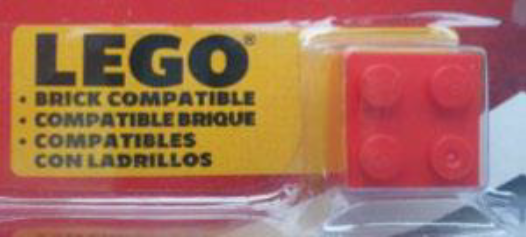
Zuru included on the front of its packaging a compatibility statement: “LEGO® BRICK COMPATIBLE”
Lego objected and served cease and desist letters on both Zuru and its principal New Zealand stockist, The Warehouse (a major general retail chain that also stocks Lego’s products). (Ellis J astutely noted at the outset of the majority judgment[1] that Lego’s copyright and patent protection for its basic products has long since expired but its LEGO® trade mark remains.[2]) The Warehouse withdrew Zuru’s bricks from sale until Zuru could resolve the issue with Lego. Zuru altered its compatibility statement to “COMPATIBLE WITH MAJOR BRANDS”, placating The Warehouse. Zuru sought, but could not reach, an agreement with Lego on wording for a compatibility statement that included the LEGO trade mark.
In order to be able to use such a statement while remaining stocked by The Warehouse, Zuru applied to the High Court for a declaration that its use of its previous “LEGO® BRICK COMPATIBLE” statement, and a series of proposed similar statements, would not infringe Lego’s registered trade marks, breach the Fair Trading Act or amount to passing off. Lego counterclaimed alleging all three of these forms of unlawful conduct.[3]
Interestingly, Zuru initially also claimed that Lego had itself breached the Fair Trading Act by falsely and misleadingly stating to The Warehouse that Zuru was infringing Lego’s intellectual property rights. It is not clear whether Zuru has any intention of reviving that claim, now that its non‑infringement position is clear (pending any further appeal to the Supreme Court).
Trade mark issues
Ellis J traversed at length and in detail the history of statutory trade mark infringement provisions and case law in New Zealand, including where these sources draw from foreign jurisprudence, providing an excellent, if lengthy, summary.[4]
Relevantly, the current legislation includes the following:
Acts amounting to infringement
89 Infringement where identical or similar sign used in course of trade
(1) A person infringes a registered trade mark if the person does not have the right to use the registered trade mark and uses in the course of trade a sign—
(a) identical with the registered trade mark in relation to any goods or services in respect of which the trade mark is registered;…
…
(2) Subsection (1) applies only if the sign is used in such a manner as to render the use of the sign as likely to be taken as being use as a trade mark.
(3) Sections 92 to 98 override this section.
Acts not amounting to infringement
94 No infringement for comparative advertising of registered trade mark
A registered trade mark is not infringed by the use of the registered trade mark for the purposes of comparative advertising, but any such use otherwise than in accordance with honest practices in industrial or commercial matters must be treated as infringing the registered trade mark if the use, without due cause, takes unfair advantage of, or is detrimental to, the distinctive character or the repute of the trade mark.
95 No infringement for honest practices
A person does not infringe a registered trade mark if, in accordance with honest practices in industrial or commercial matters, the person uses—
…
(c) a sign to indicate—
(i) the kind, quality, quantity, intended purpose, value, geographical origin, or other characteristic of goods or services; or
…
(d) the trade mark where reasonably necessary to indicate the intended purpose of the goods (in particular as accessories or spare parts) or services.
There was no doubt that Zuru’s conduct fell within section 89(1), so the questions for the Court were:
- Was Zuru’s use of “LEGO” was “in such a manner as to render the use of [“LEGO”] as likely to be taken as being use as a trade mark” i.e. was there prima facie infringement under s89?
Majority answer: no
Minority answer: yes
- Did s94 apply and, if so, did it operate merely as a defence to infringement under s89, or does the passage “…must be treated as infringing…” operate as an independent ground of infringement?
Majority answer: s94 is a mere defence provision, and that defence would apply in this case
Minority answer: s94 is an independent ground of infringement but the requirements for infringement are not met
- Did the defences in either 95(c) or 95(d) apply?
Not answered given the conclusions above
Section 89(2)
The orthodox interpretation of this section is that it is a prerequisite to a finding of infringement under s89(1). That prerequisite is met if the sign in question, here “LEGO”, is being used as an indication of the trade origin of the goods on which it is being used, i.e. that Zuru’s own bricks were LEGO brand goods. This was clearly not the case given the express statement that the bricks in question were “compatible” with LEGO bricks, thus implying that they were not themselves LEGO bricks.
The majority of the Court of Appeal applied this interpretation in favour of Lego’s submission, which it summarised as being that “use as a trade mark” encompasses:
a wider concept of a trade mark’s function, namely to act as “a guarantee that all the goods or services bearing it have been manufactured or supplied under the control of a single undertaking which is responsible for their quality” meaning the mere inclusion of the Lego mark on Zuru’s products will always constitute infringement.
The majority held that Lego’s argument failed to properly distinguish between use of a trade mark and use as a trade mark. Under the majority interpretation, as s89(2) was not met, Zuru did not infringe.
Justice Cooke, in his minority judgment, summarised Lego’s position differently, being that s89(2) is satisfied when there is “use of the mark to identify the trade mark owner’s goods or services, but there is no requirement that there be…misappropriation. So, here the word “LEGO” is plainly used to identify [Lego’s] goods, but not in a way that involves any claim of association. That is, there is no misappropriation of intellectual property.”
The fact that the Court could not even agree on exactly what position Lego was taking perhaps indicates the difficulties it faced with this argument.
Justice Cooke took the view that as LEGO has no meaning other than as a trade mark, any use of it must be use “as a trade mark.” If this interpretation was correct, then section 89(2) would not exclude from infringement any use of a third party’s mark to honestly refer to that third party’s goods whether by way of express comparison, compatibility statement or other descriptive purpose. Any allegation of infringement in those circumstances would need to be met by showing that the infringement provisions in s89(1) did not apply, or that a defence in ss92 – 98A did apply. Section 89(2) would still exclude from infringement use of another’s trade mark where that mark had an independent, descriptive meaning other than as a trade mark, and it was used in that sense. As an invented word, LEGO could never be used in such a way.
Justice Cooke also observed, with some justification, that if the majority interpretation was correct, then no use of a trade mark in a comparative advertisement could ever infringe under s89, so there would be no need for section 94.
Section 94
The court identified a peculiarity with section 94. The Trade Marks Act has s89 under the heading “Acts amounting to infringement” and s94 under the heading “Acts not amounting to infringement”. One would therefore expect sections under the first of those headings to codify all conduct that amounts to trade mark infringement, and for sections under the second heading to identify various circumstances in which an alleged infringer has a defence despite their conduct being one of the “Acts amounting to infringement.” This Court held that this expectation is met for all sections under the second heading other than sections 94 and 95. That is, that the conduct described in sections 92, 93, and 96 to 98A would otherwise be infringing under s89. (However, one could argue that the conduct described in section 93 – use of another registered trade mark – would not otherwise be infringement due to the positive right to use a trade mark conferred on an owner by section 10(1)(a) of the Act.)
Section 94 on the other hand deals with comparative advertising which, under the majority interpretation, would not otherwise infringe. Section 94 also provides what appears to be a further infringement provision, saying that that use for comparative advertising “must be treated as infringing” if that use, “without due cause, takes unfair advantage of, or is detrimental to, the distinctive character or the repute of the trade mark.” So the section, on one view, provides that certain use in comparative advertising will be infringing even though s89(2) is not satisfied. This appears to have come about from the “cut & paste” drafting of the Trade Marks Act drawing on Australian, UK, and Singaporean provisions, plus some further amendment by a parliamentary committee. The alternative view is that s94 is largely a “belt and braces” approach to ensure the enactment of clear legislative intention to permit comparative advertising. This approach was favoured by the majority, who somewhat unconvincingly said that “Whether or not that [approach] would render [section 94] largely otiose is an open question, although we do not accept that would automatically follow.”
Justice Cooke, on the other hand, stated expressly that “on the majority approach, [section 94] is rendered redundant.” He preferred the interpretation that section 94 alone regulated when comparative advertising would infringe, and that s89 was not relevant. Arguably, this approach does less violence to the words of the statute, giving s94 some real work to do, at the cost of rendering a heading arguably inaccurate. On the other hand, in the 23 years since the passage of the Trade Marks Act, it has never before been suggested that any section other than s 89 defines when trade mark infringement occurs.
Section 95
Neither the majority nor Justice Cooke found it necessary to reach any firm conclusions about the applicability of section 95.
Impact of trade mark findings
In summary, the majority decision is effectively that:
- Section 89(1) is the only provision defining infringement i.e. s94 is only a defence provision.
- Section 89(2) is a “gateway” to the application of section 89(1).
- Section 89(2) is not satisfied where the allegedly infringed trade mark is used only to refer to the trade mark owner’s goods or services (as in comparative advertising), so such use can never infringe.
- Nevertheless, section 94 is not to be automatically regarded as otiose, meaning it still has some function.
Lego has applied for leave for a further appeal to the Supreme Court which is likely to be decided in April or May 2026. If the leave application, or any appeal, is unsuccessful, the findings on the meanings of section 89(2) will remain binding on the High Court (the lower court with first instance jurisdiction in trade mark matters) and likely to be followed by the Court of Appeal in the future. The findings on s94 are obiter only and therefore not strictly binding.
If matters remain as they are, the High Court may find it very difficult to square the circle should it need to address a case where the alleged infringement both:
a. is comparative advertising, and thus cannot not infringe as it does not pass the s89(2) gateway; but
b. is also not “in accordance with honest practices in industrial or commercial matters” and “without due cause, takes unfair advantage of, or is detrimental to, the distinctive character or the repute of the trade mark.”
In those circumstances, the High Court would be faced with conduct that parliament has expressly legislated “must be treated as infringing [a] registered trade mark” but which the majority of the Court of Appeal has said can never infringe.
One possible route to resolving this conundrum would be for the High Court to reject the obiter view of the Court of Appeal majority and hold that in fact s94 does amount to an infringement provision wholly independent of section 89. A less-brave High Court may prefer to use a finding of dishonesty to primarily decide the case under the Fair Trading Act. (New Zealand trade mark infringement cases almost invariably include claims of breach of the Fair Trading Act by conduct in trade that is likely to mislead or deceive).
Fair Trading Act and passing off
Lego cross-appealed the High Court’s finding that Zuru’s conduct did not amount to conduct likely to confuse, deceive or mislead contrary to the Fair Trading Act, and did not amount to the tort of passing off.
In the High Court, Lego did not adduce any evidence of actual confusion but instead relied on expert evidence that use of the famous LEGO trade mark would be likely to confuse consumers. The High Court judge also visited a store and was shown photographs of the Zuru and Lego products as presented on the shelf to customers. The Court of Appeal noted that this gave the High Court judge an advantage. The Court of Appeal held that
- The issues of deception and misleading conduct here were not ones on which expert evidence was likely to be substantially helpful;
- Zuru’s compatibility statements themselves were not false; and
- “a touch of reality is called for…Consumers are not stupid”.
Viewing the presentation of Zuru’s products as a whole, the Court of Appeal upheld the High Court judge’s decision to largely reject Lego’s expert evidence and upheld the finding that “Consumers in the 21st century are not easily fooled, are brand-aware, and would not reasonably think Zuru’s products were made by or associated with Lego”. Because consumers would apply ‘at least a moderate level of involvement’ and would ‘take some care in choosing’, consumers ‘will recognise that those displayed under the MAX BUILD MORE label are different products to those made by LEGO’”
Although this is an orthodox approach, it is a useful reminder that consumer law is a matter of commonsense, overall impression. Where the products in question are marketed to the general public, expert evidence is unlikely to move matters beyond a judge’s own assessment of the facts.
Final note
Since the issuing of this decision, one of the counsel for Lego, Jack Oliver-Hood, has tragically passed away. Mr Oliver-Hood was highly regarded as an emerging talent at the bar, including in intellectual property, and he will be sadly missed by the profession. The authors personally, and Pearce IP, extend our condolences to Mr Oliver-Hood’s family and whanau.
[1] Judgment at [1]
[2] Lego holds a New Zealand trade mark registration for the three-dimensional shape of its “minifig” character, but not of its basic brick shapes. It also has a registration of a two-dimensional representation of its classic 4×2 brick.
[3] See the decision the subject of this appeal, Zuru New Zealand Limited v Lego Juris A/S [2023] NZHC 1808 (12 July 2023) at [19] to [24]
[4] See [11] to [107]
About Pearce IP
Pearce IP is a specialist, life-sciences focussed, intellectual property/law firm offering lawyers and attorneys in Australia and New Zealand.
In 2025, Pearce IP was honoured by Australasian Lawyer and New Zealand Lawyer as a Top Specialist Firm, 5 Star Employer of Choice, and the “Standout Winner” for Inclusion and Culture (<100 employees). Pearce IP and its leaders are ranked in every notable legal directory including: Chambers & Partners, Legal 500, IAM Patent 1000, IAM Strategy 300, MIP IP Stars, Doyles Guide, WTR 1000, Best Lawyers, WIPR Leaders, Best Law Firms, among others.
Pearce IP is the only leading IP firm in Australia and New Zealand with a female founder, and is certified by WEConnect International as women owned.

Paul Johns
Executive, Lawyer (Head of Litigation – New Zealand)
Paul is an intellectual property dispute resolution specialist with more than 24 years of experience across New Zealand and the UK. Paul is a seasoned lawyer, IP strategist, and Head of Pearce IP’s litigation team in New Zealand. Paul appears in cases before the New Zealand Court of Appeal and High Court of New Zealand, as well as the New Zealand Intellectual Property Office and IP Australia
Paul is experienced in managing contentious disputes regarding all types of intellectual property and related issues, including patents, copyright, trade marks, designs, confidential information and consumer law. With a background in molecular genetics, Paul has acted for clients across a vast range of industries, including pharmaceuticals, biotechnology, animal health, med-tech, food & beverage technologies, heavy vehicle engineering, fashion, hospitality, and entertainment. Paul is recommended for litigation in the IAM Patent 1000, rated for enforcement and litigation in the WTR1000, ranked for Intellectual Property Asia-Pacific in Chambers, and recognised for Intellectual Property and Litigation in Best Lawyers.

Kimberley Evans
Executive, Lawyer (AU) & Trade Mark Attorney (AU), (Head of Trade Marks)
Kim is a lawyer and registered Trans-Tasman trade mark attorney with a wide-ranging and impressive practice background spanning private practice, in-house experience and academic activities. Kim’s clients appreciate her responsiveness, and her ability to provide clear and pragmatic branding advice that is tailored to their commercial objectives and informed by industry developments.